STEP INTO THE RING
The AI needs eyes on you. Full body in frame. No hiding.
Video is peer-to-peer only. Nothing is recorded or uploaded.
What actually happens in those 30 seconds
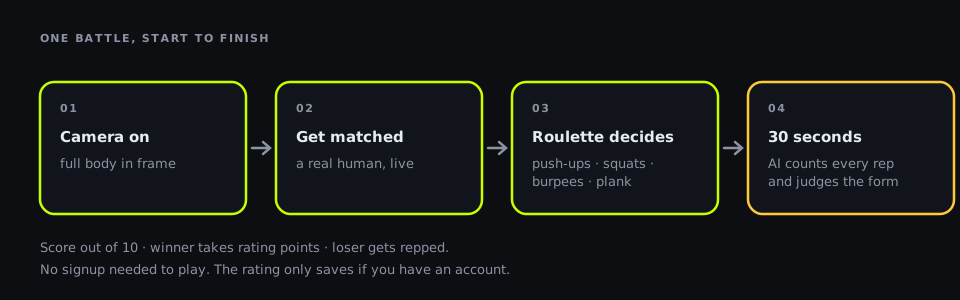
A REPPED battle is one round, 30 seconds long, against another person who is doing the same exercise at the same moment. There is no warm-up round, no best of three and no rematch button that quietly resets the score. You get one attempt, it is judged as it happens, and then it is over.
The exercise is not chosen by either fighter. It is derived from the match ID, which means both browsers compute the same answer independently and neither side can influence it. You find out what you are doing at the same instant your opponent does — usually about two seconds before you have to start doing it.
The four exercises
Every battle lands on one of these. The target is what a clean, uninterrupted 30 seconds looks like — hit it and the rep half of your score is maxed out.
Push-ups
Target: 20 reps in 30s
- Side-on to the camera, full body visible
- Chest to the floor — half reps get flagged
- Lock out at the top or it doesn't count
Squats
Target: 25 reps in 30s
- Side-on to the camera, full body visible
- Break parallel — shallow squats are a gym crime
- Stand all the way up between reps
Burpees
Target: 10 reps in 30s
- Full body in frame at all times
- Stand → floor → stand = one rep
- Incomplete cycles are void
Plank
Target: hold all 30 seconds
- Side-on to the camera, body straight
- Hips sag = points bleed
- Hold for the full 30 seconds
How the score is built
Your final 1–10 is not a rep count with decoration on top. It combines how many repetitions you completed against that exercise's target, how cleanly each one hit its depth thresholds, and how evenly you paced them. Someone who does fourteen honest push-ups can and does beat someone who does twenty shallow ones, because the shallow ones are recorded as half reps and half reps are worth exactly half.
All of that judging happens on your own device. The pose model runs in your browser, reads the joint angles out of the camera feed and throws the frame away. Your video is sent peer-to-peer to your opponent so they can see who they are fighting; it is never uploaded to us, never stored, and there is no recording to go back and look at afterwards — ours or anyone else's.
What a win is worth
Results settle through standard Elo with a K-factor of 32. In practice: beating someone rated far above you moves you a long way, beating someone far below you barely moves you at all, and losing works the same in reverse. It is the same arithmetic chess has used for sixty years, and it is there for the same reason — so that a rating means something specific rather than just counting how often you showed up.
You can fight as a guest without an account and the battles are identical. The only difference is that a guest's rating lives in that browser and disappears with it. An account is what makes the number permanent, puts you on the leaderboard and carries your record into the current season.